
What is Helicobacter pylori?
Agnieszka Słonina, clinical dietitian

Learn about Helicobacter pylori, its symptoms, ways of diagnosing it, treatment, home remedies and the influence of diet, and answers to the question of why it may come back.
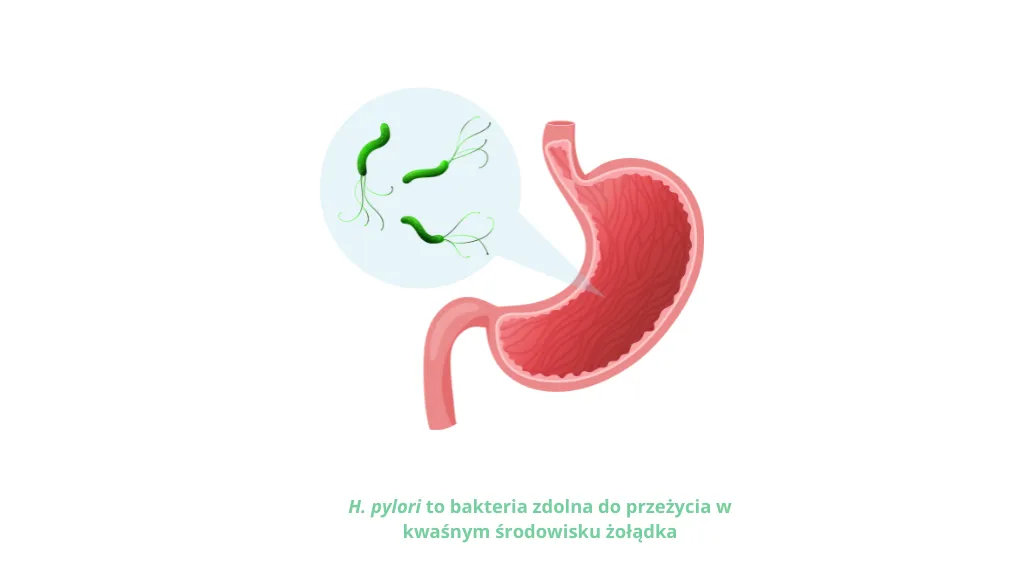
Helicobacter pylori is a rod-shaped bacterium. It has polar flagella that enable it to move around. The bacterium is equipped with a characteristic enzyme, urease, which allows it to survive in the acidic environment of the stomach. H. pylori infection is one of the most common bacterial infections in the world. According to WHO data, the infection occurs in around 70-80% of the general population in developing countries. In Poland, the infection reaches 60-70% of the population, of which an estimated roughly 60% of the population over 18 years of age and roughly 30% of the population under 18 years of age is infected.
H. pylori infection is strongly linked to diseases of the digestive tract, including gastritis, peptic ulcer, stomach cancer, and lymphoma of the lymphatic tissue associated with the gastric mucosa. The bacterium has been classified as a group 1 carcinogen. The risk of stomach cancer in people infected with H. pylori is 2 to 7 times greater than in people who are not infected.
Although around half of the world's population is infected with H. pylori, only 10-20% are at risk of developing peptic ulcers, and only 1-2% are at risk of stomach cancer or lymphoma of the lymphatic tissue associated with the mucosa.
Helicobacter pylori symptoms
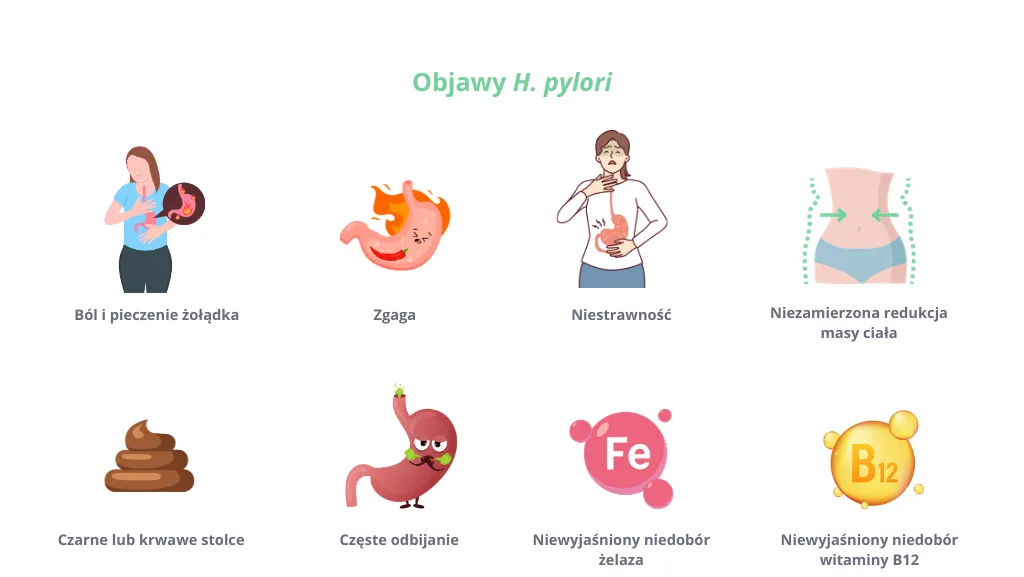
As many as 80% of H. pylori infections are asymptomatic. However, if symptoms do appear, we can identify the following among them:
- indigestion
- heartburn
- stomach pain (often on an empty stomach), so-called hunger pain
- black or bloody stools
- weight loss (unintentional)
- frequent belching
- stomach pain and burning
- unexplained iron deficiency
- unexplained vitamin B12 deficiency
How does H. pylori damage the stomach?
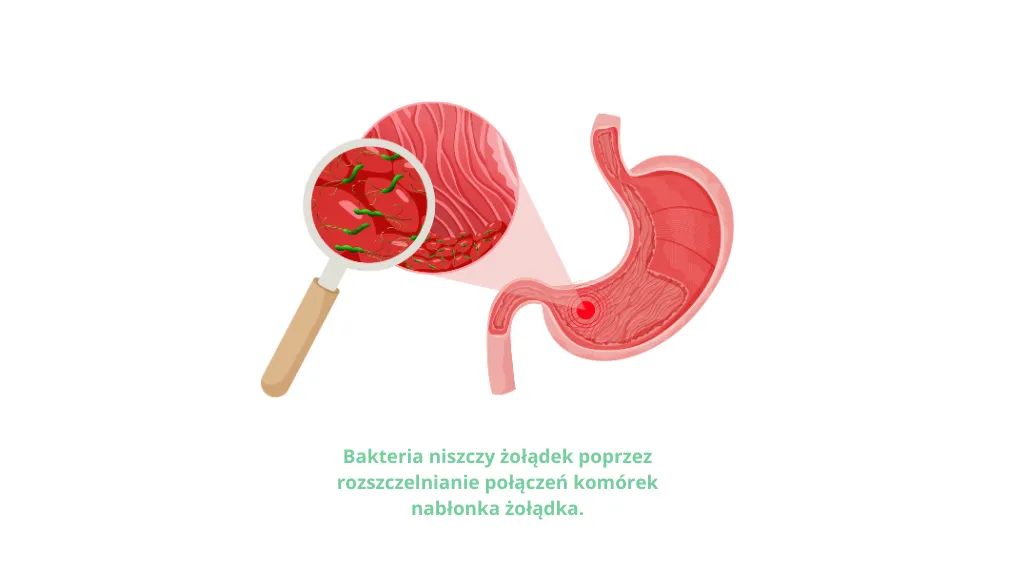
H. pylori, by adhering to the epithelial cells of the stomach, secretes factors that are able to alter cell function and shorten cell survival. In addition, these changes are reinforced by the secretion of pro-inflammatory factors that are involved in the development of the inflammatory infiltrate. This process intensifies inflammation and damage to the epithelial cells. The bacterium is able to produce a protein that leads to inhibition of the cells' ability to reproduce and degrades their cytoskeleton. Another effect of this protein is the loosening of the junctions between the gastric epithelial cells. The bacterium secretes urease, an enzyme that leads to an increase in stomach pH. In the course of the infection, the bacterium also releases other enzymes, such as proteases and lipases, which deepen the damage to the epithelial cells.
Is Helicobacter pylori contagious?
Infection usually occurs during childhood. Risk factors include: low socio-economic status, a larger number of siblings in the family, and the presence of infection in the parents, especially the mother. H. pylori infection spreads via the alimentary (gastro-oral) or fecal-oral route. Importantly, in developing countries, infection can also occur through the consumption of contaminated water. Among the risk factors, diet has proven to be an important element affecting H. pylori infection.

How to detect Helicobacter pylori?
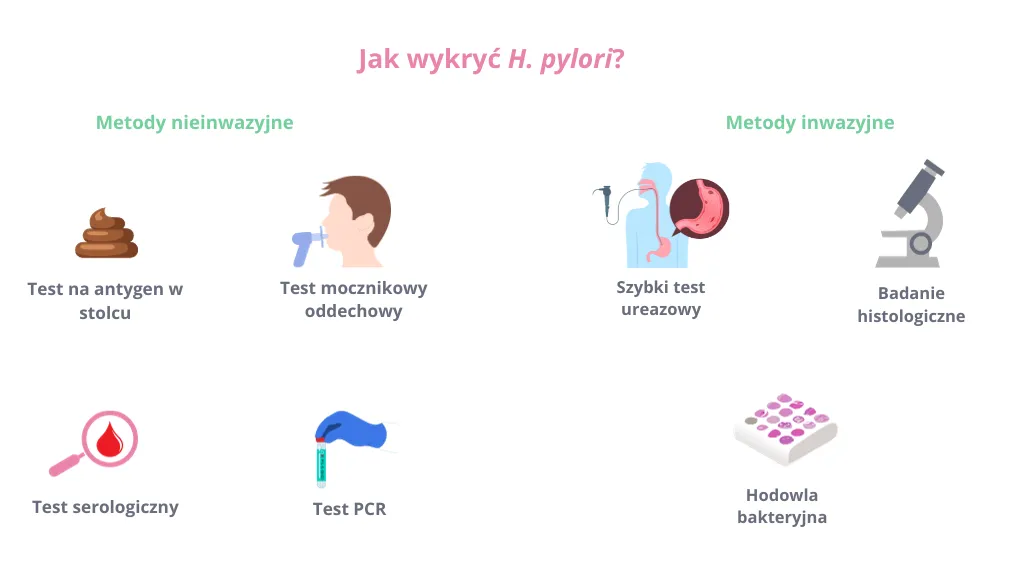
The detection of H. pylori is divided, according to the way the material is obtained, into invasive and non-invasive methods:
Non-invasive methods:
a) Urea breath test - the so-called gold standard - is based on the bacterium's ability to break down urea using its own enzyme, urease. Hence the name of the test. Thanks to urease, the bacterium is able to break urea down into ammonia. Ammonia, in turn, creates an alkaline reaction in an aqueous environment, which causes neutralization of the hydrochloric acid naturally present in the stomach. In addition to ammonia, a product of the reaction mentioned above is carbon dioxide, whose presence is detected in the breath test.
- sensitivity 90-95%
- specificity 90-98%
- can be used to assess the effectiveness of bacterial eradication after at least 4 weeks
advantages: high predictive value of a positive and negative result
disadvantages: false negative results while using proton pump inhibitors, antibiotics, and/or bismuth
b) Stool antigen test - the method involves examining a stool sample. It is recommended to perform an ELISA test, because the immunochromatographic test has lower sensitivity.
- sensitivity 90%
- specificity 90%
- can be used to assess the effectiveness of bacterial eradication
advantages: high predictive value of a positive and negative result
disadvantages: false negative results during PPI treatment and just after antibiotic therapy or after using bismuth preparations
c) Serological test - the method involves detecting antibodies against H. pylori in the blood in the IgG and IgA classes. The test can be used in screening studies when other methods are unavailable.
- sensitivity 85-95%
- specificity 85-95%
advantages: low cost of the test, widespread access to the test
disadvantages: a positive result indicates a past infection rather than a current one and is not suitable for assessing the effectiveness of eradication
d) PCR - assessment of the specific bacterial DNA encoding its special properties; the material for the test is stool or saliva. The sensitivity of the test is lower when testing saliva.
- sensitivity 50-60%
- specificity 100%
- can be used to assess the effectiveness of bacterial eradication
advantages: high specificity
disadvantages: high cost of the test
Invasive methods:
a) Rapid urease test - the examination is performed during gastroscopy. The test uses a fragment of the gastric mucosa collected during the examination. If the tested sample contains bacteria, during the test an alkaline solution containing ammonia will form, which will cause a change in the color of the indicator paper.
- sensitivity 95%
- specificity 95%
false negative result
- active or recent bleeding into the upper section of the digestive tract
- use of drugs from the PPI group, H2 blockers, antibiotics, and/or bismuth
false positive result:
- infection with other pathogens
- presence of bile in the stomach
b) Histological examination - involves staining a section of the mucosa collected during gastroscopy with various markers
- sensitivity 50%
- specificity 100%
advantages: high specificity
disadvantages: substantial experience in assessing preparations is required
c) Bacterial culture - the indication for this examination is at least two failed therapies as well as an allergy to an antibiotic recommended in the eradication regimen.
sensitivity 50%
specificity 100%
advantages: the possibility of assessing antibiotic resistance
disadvantages: high cost and low sensitivity
Note: all follow-up tests aimed at assessing the effectiveness of bacterial eradication should be performed at least 4 weeks after the end of antibiotic therapy and 2 weeks after discontinuing proton pump inhibitor therapy.
When to treat Helicobacter pylori?
It should be remembered that the bacterial infection is asymptomatic in the vast majority of people. All people with a diagnosed H. pylori infection should receive treatment. Meanwhile, diagnostic tests for H. pylori should be performed in people with:
- gastric and/or duodenal ulcer disease (active, inactive, complicated)
- MALT-type gastric lymphoma
- atrophic gastritis
- a condition following gastric resection due to cancer
- first-degree relatives of stomach cancer patients
- undiagnosed or functional dyspepsia
- long-term treatment with proton pump inhibitors
- planned longer-term treatment with non-steroidal anti-inflammatory drugs (NSAIDs)
- primary immune thrombocytopenia
- unexplained iron deficiency anemia
- vitamin B12 deficiency
In all patients with alarm symptoms, endoscopic examinations should be performed and additionally supplemented with a rapid urease test and a possible histological examination. In patients younger than 60 years with undiagnosed dyspepsia and no alarm symptoms, the decision regarding eradication of the infection can be made on the basis of non-invasive diagnostic tests.
Patients with gastroesophageal reflux disease with typical symptoms and no history of ulcer disease do not require diagnosis of H. pylori infection. However, in patients in whom an examination was performed and the presence of infection was indicated, eradication should be carried out after informing them that the effect of such treatment on the course of reflux disease is unpredictable.
An important diagnostic group with regard to H. pylori may turn out to be people taking aspirin chronically. The presence of H. pylori together with the simultaneous use of aspirin may favor duodenal ulcers.
Helicobacter pylori - which doctor?
To confirm whether testing for H. pylori infection is justified, it is worth going to a gastroenterologist. Treatment can also be prescribed by a primary care physician.
What to take for Helicobacter pylori?
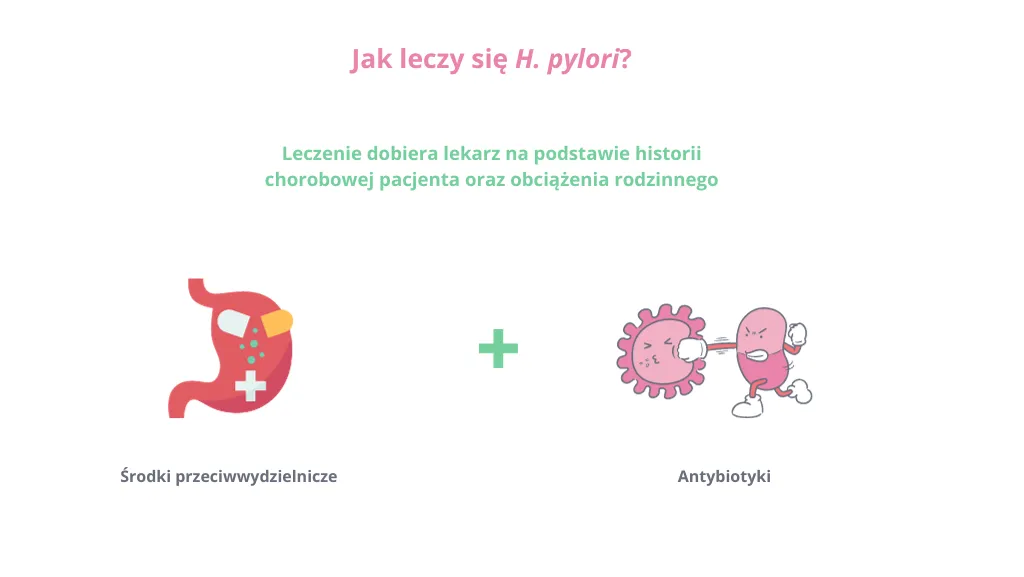
Treatment of the bacterium is based on a combination of antimicrobial agents and antisecretory agents (mainly proton pump inhibitors - PPIs). Raising the pH in the stomach by using PPIs is required so that the antibiotics achieve a bactericidal effect. Depending on the therapy regimen, they have different names.
First-choice therapy
A. Triple therapy without clarithromycin - 10 days
- PPI
- amoxicillin
- metronidazole
B. Quadruple therapy with bismuth - 10-14 days
- PPI
- bismuth citrate
- tetracycline
- metronidazole
C. Quadruple therapy without bismuth - 14 days
- PPI
- amoxicillin
- clarithromycin
- tinidazole/ metronidazole
Antibiotic therapy is ineffective in about 20% of patients, mainly due to antibiotic resistance, patient non-compliance with the doctor's recommendations, and the fact that the bacterium can hide in the gastric mucosa or even intracellularly.
Home remedies for Helicobacter pylori?
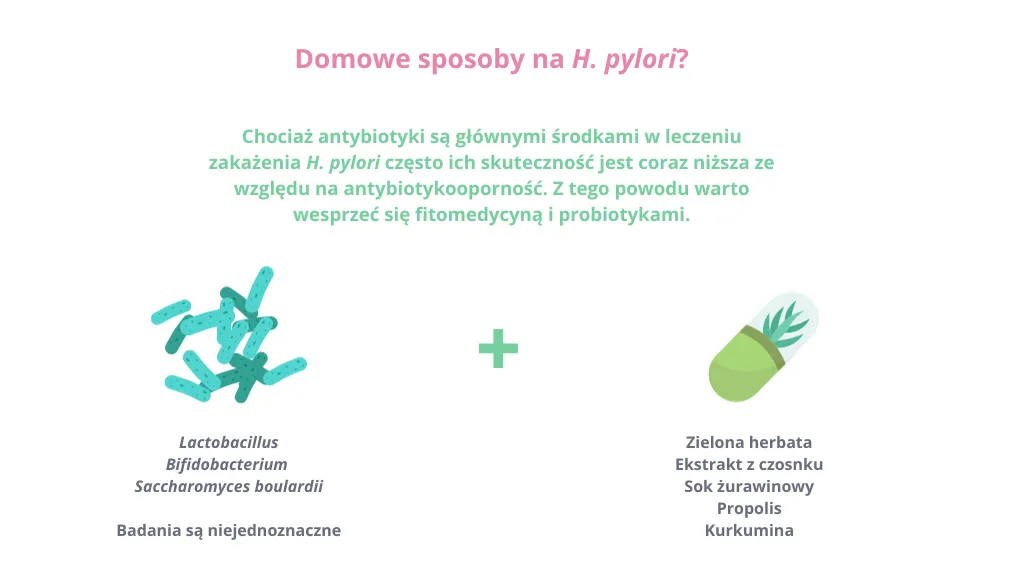
Although antibiotics are the main agents used in the treatment of H. pylori infection, the development of bacterial resistance has limited their use. In addition, antibiotic treatment is not indifferent to the gut microflora. For this reason, alternative therapies have begun to be used, including phytomedicine and probiotics.
A. Probiotics
The use of probiotics may protect against bacterial infections by stimulating the immune response or through direct competition with the bacterium itself. Some bacterial strains are able to secrete so-called bacteriocins, which have an anti-H. pylori effect. The beneficial effect of probiotics on this infection may be linked to supporting the gastric mucosa and regulating immunity. Positive effects are observed with regard to reducing the adverse effects of antibiotic therapy when using probiotics of the Lactobacillus and Bifidobacterium families. However, the effectiveness of probiotics in eradicating the bacterium itself is not always observed.
According to some studies, supplementation with the Saccharomyces boulardii strain during antibiotic therapy increases the eradication rate and reduces the side effects resulting from antibiotic administration. In other studies, positive effects are observed with the administration of probiotics of the Lactobacillus genus.
B. Phytomedicine
Phytotherapy can be defined as the use of plant extracts as medicinal agents. There is a growing body of evidence for the effectiveness of supporting H. pylori treatment by combining green tea, garlic extract, cranberry juice, and propolis. The use of oregano may also prove to be an effective support for conventional treatment. An important role in supporting treatment may be played by a compound called sulforaphane, which is present in broccoli and broccoli sprouts. Turmeric and black cumin may also prove to be a support during the treatment of H. pylori. It is also worth including resveratrol, present in red grapes.
Extracts of rosemary leaves, peppermint leaves, and ginger also have moderate anti-H. pylori activity. In animal studies, garlic extract significantly reduced the markers of gastric mucosa inflammation caused by H. pylori infection.
Why does Helicobacter pylori come back?
Helicobacter pylori is a bacterium that is constantly acquiring resistance to antibiotics. Resistance to clarithromycin, metronidazole, and increasingly to levofloxacin, limits the effectiveness of commonly used eradication regimens.
The presence of resistance to clarithromycin reduces the effectiveness of triple clarithromycin therapy by about 50%. Resistance to levofloxacin reduces the effectiveness of treatment regimens using this drug by about 20-40%. In the case of metronidazole, bacterial resistance worldwide is quite high; however, in such a case the doctor may increase the dose or duration of the metronidazole treatment, which improves eradication outcomes also against metronidazole-resistant strains. In Europe, it is estimated that H. pylori resistance to antibiotics is:
- amoxicillin 0.5%
- clarithromycin 11.1%
- metronidazole 17%
- levofloxacin 24.1%
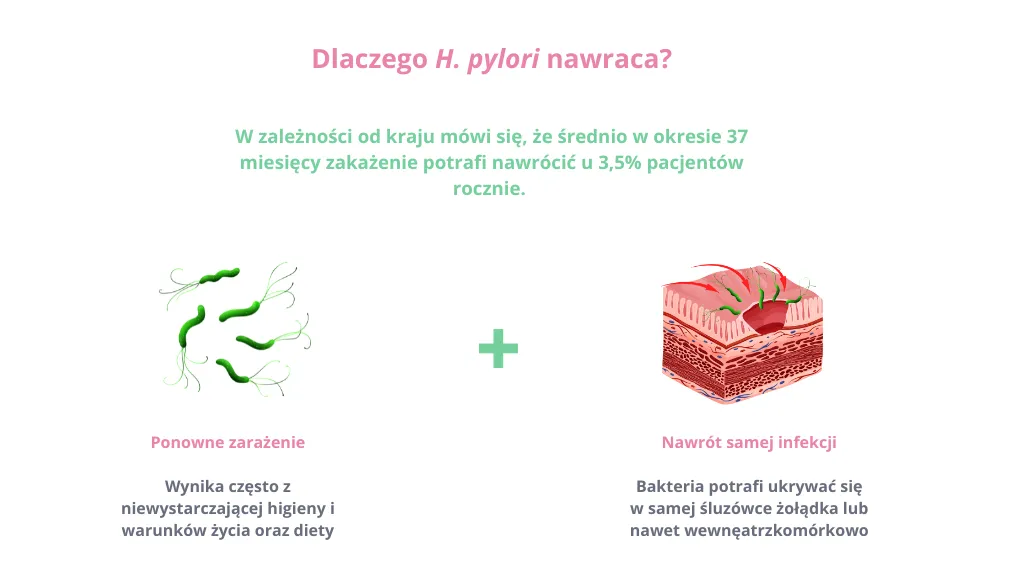
In areas of low socio-economic development, there is a greater likelihood of recurrence of H. pylori infection. Depending on the country, it is said that on average, over a period of 37 months, the infection can recur in 3.5% of patients per year. In general, recurrence of infection after successful eradication is considered a rare phenomenon and usually results from re-infection as well as recurrence of the infection itself. Improvement of hygiene and living conditions appears to be an important factor reducing the incidence of infection. It has been shown that a high intake of fruits and vegetables containing vitamin C was significantly associated with a reduced risk of H. pylori re-infection.
Helicobacter pylori vs SIBO
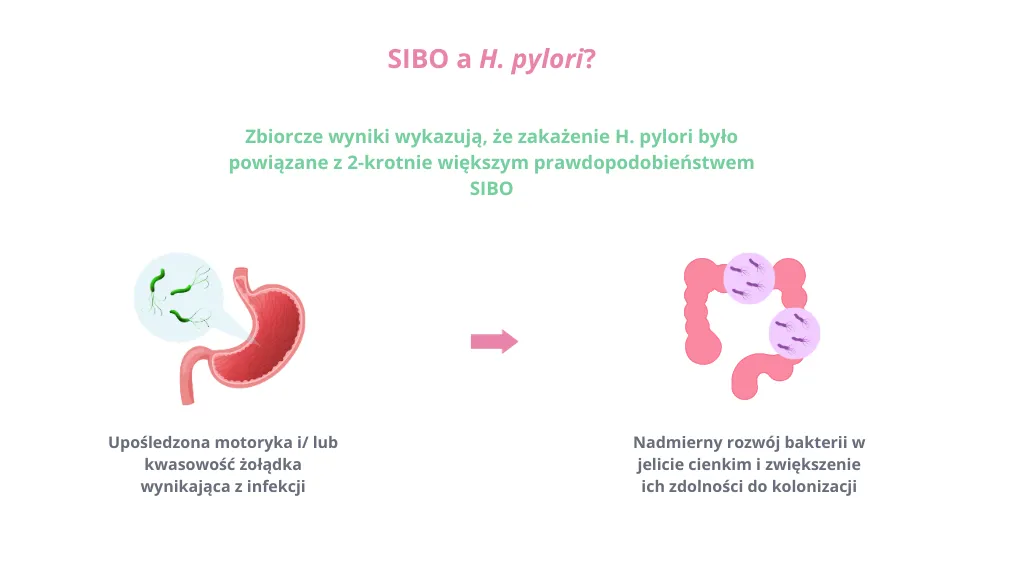
An excess of bacteria in the small intestine that causes gastrointestinal symptoms is called small intestinal bacterial overgrowth (SIBO). More and more studies suggest that, in addition to stomach diseases, H. pylori infection may also be involved in the pathogenesis of certain intestinal disorders. According to some studies, impaired motility and/or acidity of the stomach probably enables the excessive growth of bacteria in the small intestine and increases their colonization. H. pylori, due to its ability to change the pH of stomach acid, enables the proliferation of intestinal organisms.
Pooled results show that H. pylori infection was associated with a 2-fold greater likelihood of SIBO. Interestingly, the association between H. pylori infection and SIBO was stronger in younger people than in older ones. The use of proton pump inhibitors (PPIs) alone during H. pylori treatment is also associated with an increased risk of SIBO, probably as a result of the increased stomach pH after taking the drugs. It has been shown that the use of PPIs is associated with a 3-fold increase in the risk of SIBO. Nevertheless, it is believed that the association between H. pylori infection and SIBO was independent of PPI use, and eradication of H. pylori itself was associated with an improvement in SIBO.
Helicobacter pylori diet
The quality of the diet may be linked to H. pylori infection. A balanced diet with high antioxidant properties may have a protective effect against the consequences of the infection. Unhealthy dietary patterns have been linked to a greater risk of H. pylori infection and an increased likelihood of developing diseases associated with it. A high intake of grains and vegetables was inversely associated with H. pylori infection, whereas a diet rich in processed carbohydrates and sweets was associated with a more frequent occurrence of the infection. Following an anti-inflammatory diet, characterized by an increased intake of a variety of fruits, vegetables, whole-grain products, and healthy fats, is identified with a reduced risk of infection. Moreover, the consumption of antioxidants in the form of valuable food products has a positive effect on the risk of H. pylori infection. Antioxidants, coming mainly from fruits and vegetables, are able to inhibit bacterial growth by reducing reactive oxygen species and inflammation caused by H. pylori.
A proper diet during eradication, as well as before and during the H. pylori infection itself, is also of great importance in the context of developing chronic atrophic gastritis. Patients who followed the dietary recommendations experienced 3.4 times fewer symptoms and had 5.5 times lower signs of inflammation than people who did not follow this diet. The diet used in H. pylori infection should above all be varied and rich in vegetables and fruits, which are a source of substances capable of supporting bacterial eradication. For example, parsley and celery contain apigenin, a type of flavonoid responsible for inhibiting certain bacterial virulence pathways. The contribution of curcumin, a polyphenol naturally occurring in turmeric, also significantly affected H. pylori activity. Capsaicin, present in chili, significantly inhibited the production of inflammatory cytokines induced by H. pylori. Beta-carotene, a well-known carotenoid, also has a limiting effect on the bacterial infection. It is also worth enriching the diet with green tea, which is rich in catechins; it will exhibit anti-H. pylori activity and reduce damage to the gastric mucosa. In the diet of people with H. pylori, alcohol, spicy dishes, and carbonated drinks are not recommended. The hygiene of eating meals also plays a significant role. The speed of eating a meal and regularity are important factors affecting the quality of the diet.

Bibliography
Gonciarz M., Pruszowski J., Krzyżowska K.: Zasady diagnostyki i leczenia zakażenia bakterią Helicobacter pylori. Wytyczne dla POZ.
Chey W.D., Leontiadis G.I., Howden C.W. I wsp.: ACG Clinical Guideline: Treatment of Helicobacter pylori Infection. Am J Gastroenterol. 2017, 112(2):212-239.
Campuzano-Maya G.: Hematologic manifestations of Helicobacter pylori infection. World J Gastroenterol. 2014, 20(36):12818-38.
Eusebi L. H., Zagari R. M., Bazzoli F.:Epidemiology ofHelicobacter pylori Infection. Helicobacter, 2014 19, 1-5.
Yang J.C., Lu C.W., Lin C.J.: Treatment of Helicobacter pylori infection: current status and future concepts. World J Gastroenterol. 2014, 20(18):5283-93.
Vítor J. M. B., Vale F. F.: Alternative therapies for Helicobacter pylori: probiotics and phytomedicine. FEMS Immunology & Medical Microbiology,2011, 63(2), 153-164.
Wang Y.C.: Medicinal plant activity on Helicobacter pylori related diseases. World J Gastroenterol. 2014, 20(30):10368-82.
Xiu Y., TianWen Y., Jie Y. i wsp.: Clinical Efficacy of Diet Intervention Cmbined with Bismuth Potassium Cirtate in Helicobacter pylori-Related Chronic Atrophic Gastris. Alternative Therapies, 2023, Vol 29, 8.
Xiong Y.J., Du L.L., Diao Y.L. i wsp.: Association of dietary inflammatory index with helicobacter pylori infection and mortality among US population. J Transl Med. 2023, 21(1):538.
de Brito B.B., da Silva F.A.F., Soares A.S. i wsp.: Pathogenesis and clinical management of Helicobacter pylori gastric infection. World J Gastroenterol. 2019, 25(37):5578-5589.
Liao L., Su B.B., Xu S.P.: Helicobacter pylori infection and small intestinal bacterial overgrowth: a systematic review and meta-analysis. BMC Microbiol. 2023, 23(1):386.
Dharan M., Wozny D.: Helicobacter pylori infection and small intestinal bacterial overgrowth-more than what meets the eye. World J Clin Cases. 2022, 10(21):7209-7214.

Consultation with a dietitian
Interested in changing your
eating habits?