What is reactive hypoglycemia?
Agnieszka Słonina, clinical dietitian
Discover the causes, symptoms, and treatment methods of reactive hypoglycemia, its types and diagnostic challenges, as well as dietary advice and consultations with specialists.
What is reactive hypoglycemia?
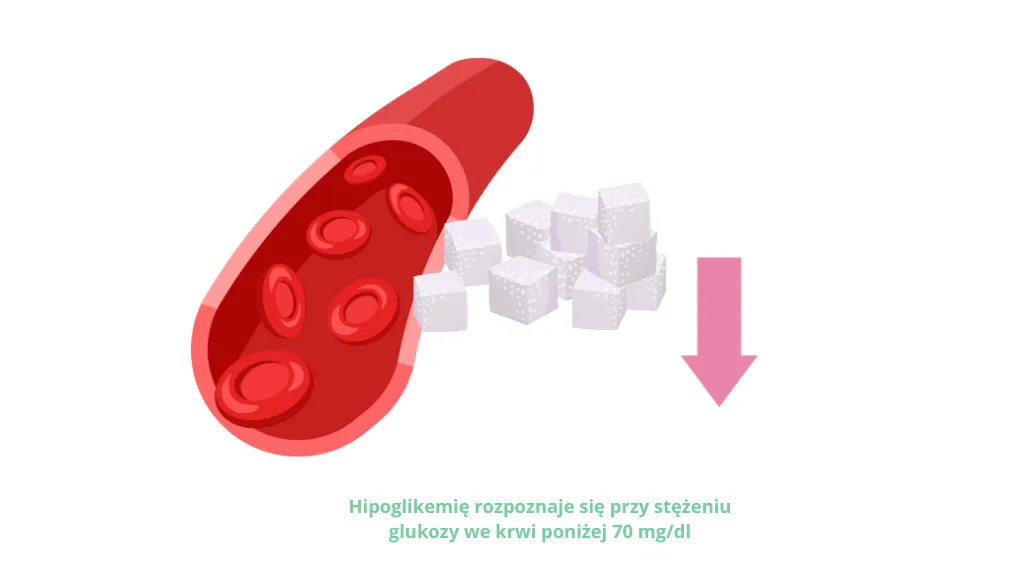
Hypoglycemia is diagnosed when the blood glucose concentration falls below 70 mg/dl, which corresponds to 3.9 mmol/l. The diagnosis is independent of the occurrence of clinical symptoms, which in some people, especially those with type 1 diabetes, appear only at lower glycemic values. A value below 54 mg/dl, corresponding to 3 mmol/l, is considered clinically significant hypoglycemia. Importantly, symptoms of hypoglycemia may also appear at higher values, even >100 mg/dl (5.6 mmol/l). This is when a rapid drop in glucose occurs.
The so-called „hypoglycemia unawareness”, defined as the failure to sense pathologically low (</ 70 mg/dl i.e. 3.9 mmol/l) glycemic levels, is a significant complication of the frequent occurrence of hypoglycemic episodes.
Severe hypoglycemia is diagnosed when, during an episode, the assistance of others is required to raise the glucose level.
Reactive hypoglycemia is a condition that occurs 2-5h after food intake. It is observed in patients in prediabetic and diabetic states, in gastrointestinal dysfunctions, and in patients with hormone deficiency states. Each of these disorders is accompanied by characteristic changes in insulin secretion. **An elevated insulin level is usually the cause of hypoglycemia.
**
Insulin secretion occurs in two phases. The first phase consists of a sudden release of insulin during the first 10 minutes. In the second phase, insulin is slowly secreted over several dozen minutes. A healthy insulinemia profile additionally shows the presence of small-amplitude pulses every 5-10 minutes. Superimposed on these pulses are fluctuations in insulinemia, so-called oscillations, every 1-2 hours. The loss of the 1st phase of insulin secretion leads to a relative delay and increase in insulin secretion in the second phase, which in turn leads to hypoglycemia.
What stimulates insulin secretion?
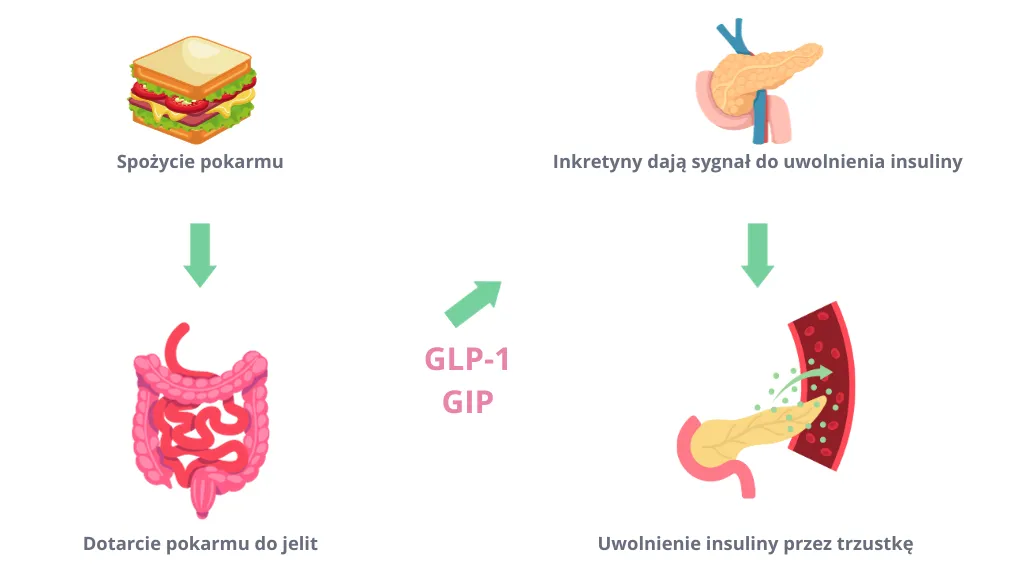
Incretins are a group of intestinal hormones that increase postprandial insulin secretion by pancreatic cells, even before a postprandial rise in blood glucose occurs. The best-studied representatives of this group are glucagon-like peptide 1 (GLP-1) and glucose-dependent insulinotropic peptide (GIP).
Basal secretion of GLP-1 from the cells of the small and large intestine rapidly increases within a few minutes in response to the intake of nutrients present in the intestinal lumen, including carbohydrates, fats, and proteins. GLP-1 increases insulin secretion and inhibits glucagon secretion from the liver in a glucose-dependent manner. GIP, on the other hand, is secreted mainly by the cells of the proximal jejunum and duodenum, in response to the intake of carbohydrates and fat. It also has the ability to stimulate insulin secretion in a glucose-dependent manner. Fat alone administered orally, without carbohydrates, induces GIP secretion, but this is not sufficient to stimulate insulin secretion. GLP-1 and GIP together are responsible for the full incretin effect.
In people without diabetes, incretins account for 50-70% of the total insulin secreted after oral glucose administration. The action of incretins is diminished and accounts for 20-35% of the insulin response to oral glucose in patients with **type 2 diabetes.**The evidence for the existence of incretins is supported by the fact that glucose administered orally induced a greater insulin response than intravenous insulin injection.
Types of reactive hypoglycemia
a) Early postprandial reactive hypoglycemia
Occurs within the first 1-2 hours of the glucose tolerance test. This may be caused by accelerated gastric emptying or an excessive incretin effect.
b) Idiopathic reactive hypoglycemia
Occurs in the 3rd hour of the glucose tolerance test. Most often in adolescents and people with a normal body weight. Increased insulin sensitivity is probably a feature of this type of hypoglycemia.
c) Late reactive hypoglycemia
Occurs in the 3rd-5th hour of the glucose tolerance test. It can often be caused by insulin resistance.
What causes reactive hypoglycemia?
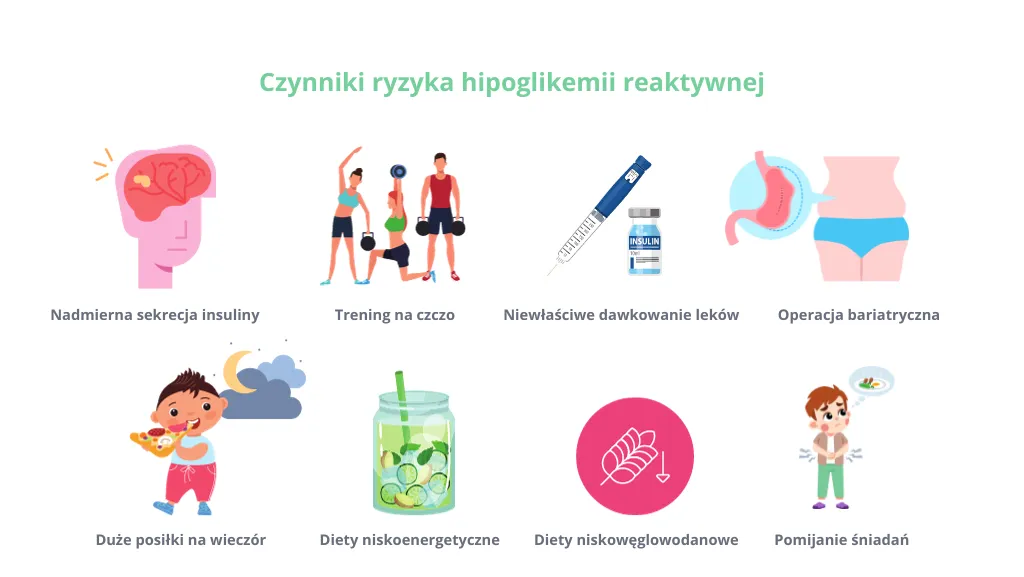
The risk of hypoglycemia increases in the following situations:
- coexistence of other diseases predisposing to hypoglycemia (including renal failure, hypothyroidism, adrenal cortex insufficiency, eating disorders, diseases involving intestinal malabsorption)
- use of insulin alone or in combination with other antihyperglycemic drugs
- use of sulfonylurea derivatives alone or in combination with other antihyperglycemic drugs
- improper dosing of the above-mentioned drugs in situations of increased exertion, reduced calorie intake, or alcohol consumption
- excessive insulin secretion
- an episode of severe hypoglycemia in recent weeks
- hunger, malnutrition, cachexia
- intense physical activity (especially on an empty stomach)
- bariatric surgery (e.g. gastric resection)
- renal glucosuria (excretion of glucose in the urine in people without diabetes)
- early phase of type 2 diabetes - impaired 1st phase of insulin secretion
- idiopathic reactive hypoglycemia
- young people aged 20-45, women
- normal body weight or overweight
- a history of frequent weight reduction achieved on low-energy diets or low-carbohydrate diets
- irregularity in eating meals, skipping breakfast
- eating large meals in the evening
Reactive hypoglycemia symptoms
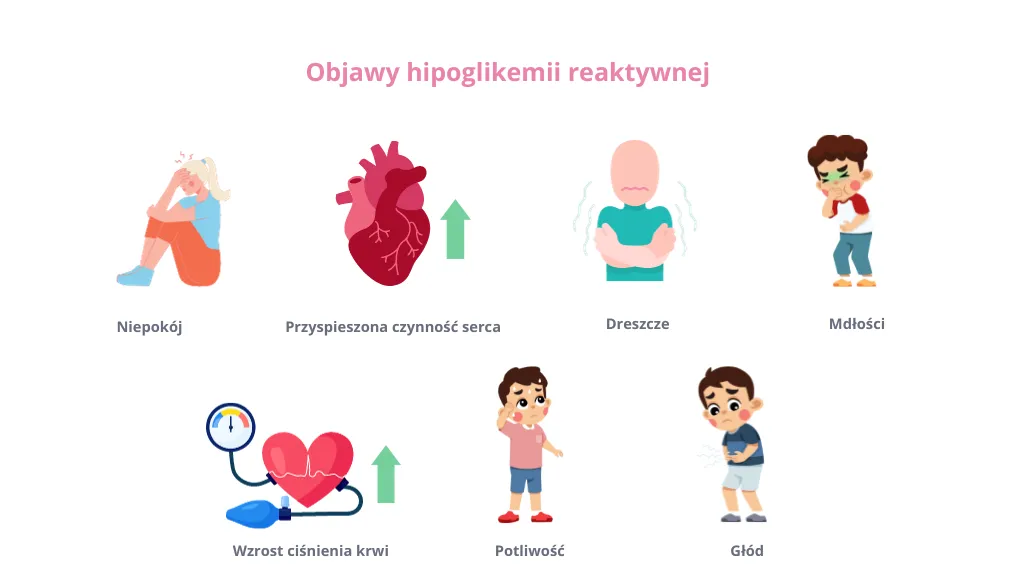
In the early phase (glucose 60-70 mg/dl), symptoms resulting from the action of adrenaline dominate:
- anxiety
- pallor
- hand tremors
- accelerated heart rate
- nervousness
- increased blood pressure
- sweating
- nausea
- hunger
At glycemia below 55 mg/dl:
- disorientation and impaired concentration
- speech disturbances
- impaired visual acuity
- confusion
- chills
- coma
Is reactive hypoglycemia dangerous?
Hypoglycemia in certain situations, e.g. in the case of elderly people or people with ischemic heart disease, may pose a direct threat to life.
That is why, in hypoglycemia, the foundation is the constant monitoring of blood glucose concentration.
How to diagnose reactive hypoglycemia?
In clinical practice, the use of the glucose tolerance test (OGTT) can be considered a suboptimal method for diagnosing reactive hypoglycemia. The OGTT can give false results due to individual variability in the perception of symptoms at normal blood glucose concentrations.
The most adequate test for diagnosing reactive hypoglycemia is the extended glucose tolerance test (5h-OGTT), which will also allow the detection of late and idiopathic hypoglycemia.
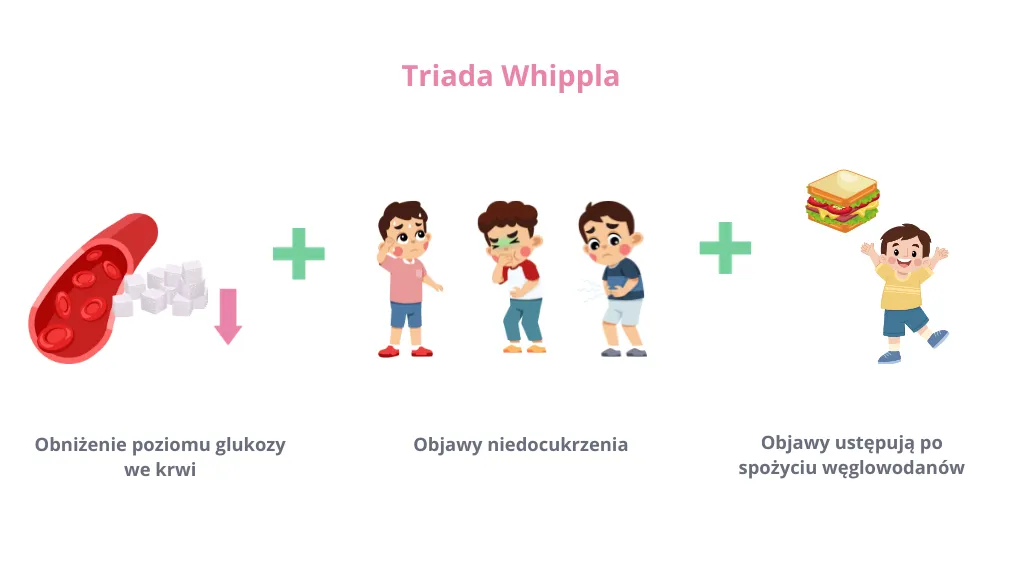
The diagnosis of hypoglycemia requires the so-called Whipple's triad, which assumes that a patient with reactive hypoglycemia is a patient: with a reduced blood glucose concentration, in whom symptoms of hypoglycemia occur, which resolve after eating a meal rich in carbohydrates.
In the diagnosis of hypoglycemia, it is worth taking into account the possibility of disorders that cause hypoglycemia:
- neuroendocrine tumor
- hyperthyroidism
- adrenal cortex insufficiency
- alcoholism
- mental disorders with similar symptoms, e.g. anxiety disorders
Reactive hypoglycemia treatment
In patients who are unable to implement dietary changes or in whom the implemented changes do not improve their well-being, pharmacotherapy may be considered.
The suggested drug is acarbose, which causes reduced absorption of carbohydrates in the gastrointestinal tract. Acarbose should be taken before main meals or only before those dishes that most often cause symptoms of hypoglycemia. Another proposed drug is metformin, commonly used in patients with insulin resistance and hyperinsulinemia, which often accompany reactive hypoglycemia. The mechanism of action of this drug consists, among other things, of increasing the sensitivity of tissues to insulin, reducing glucose production in the liver, and reducing glucose absorption from the gastrointestinal tract.
Reactive hypoglycemia what to eat?
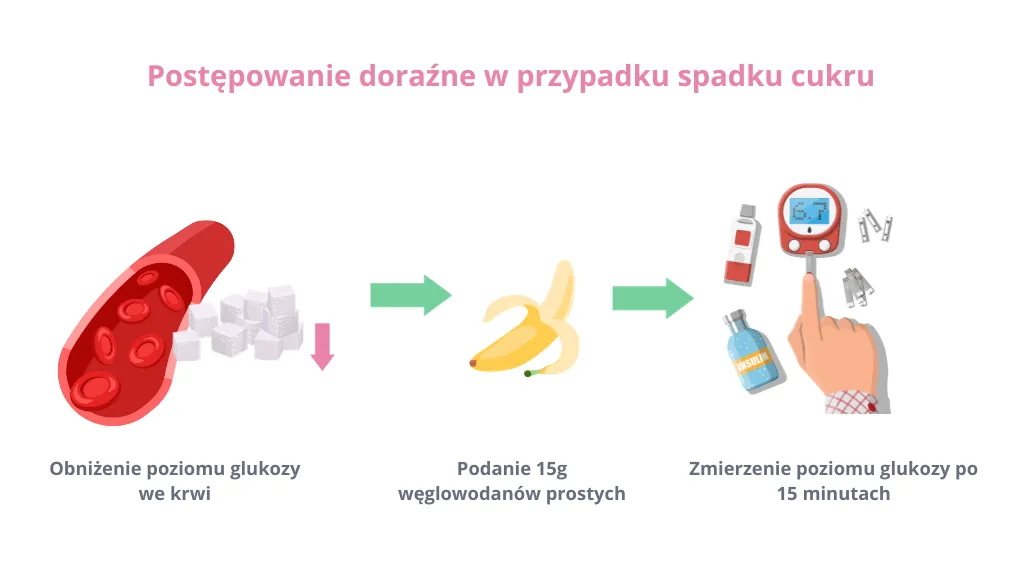
In the case of reactive hypoglycemia, the most important thing is to remember the emergency management in the event of a hypoglycemic episode. It is recommended to consume 15g of glucose or other simple carbohydrates (e.g. half a banana, a teaspoon of honey, a handful of raisins, four hard candies) and to check glycemia after 15 minutes. In the case of persistent hypoglycemia, it is recommended to repeat this scheme until normal glucose values are achieved.
In addition, the most important principles of reactive hypoglycemia include:
- introducing a low-GI diet
- regularity of meals, even distribution of carbohydrates
- avoiding fasting and restricting carbohydrates
- proteins and fats should be present in every meal
- it is worth adding fructose instead of glucose to meals - especially in the form of fruit (it does not significantly intensify insulin surges, small doses improve glucose tolerance)
- high fiber content in the diet - especially legumes
- avoiding alcohol - it increases the frequency of hypoglycemic incidents
Bibliography
Galati S.J. et al.: Approach to the patient with postprandial hypoglycemia. Endocr Pract. 2014, 20(4), 331-40
Altuntaş Y.: Postprandial Reactive Hypoglycemia. Sisli Etfal Hastan Tip Bul. 2019, 53(3), 215-220.
Czupryniak L. et al.: Zalecenia kliniczne dotyczące postępowania u osób z cukrzycą 2023. Offical Journal of the Diabetes Poland, 2023, Vol 3.
Campbell J.E. et al.: Pharmacology, physiology, and mechanisms of incretin hormone action. Cell Metab. 2013, 17(6), 819-837.
Kim W.: The role of incretins in glucose homeostasis and diabetes treatment. Pharmacol Rev. 2008, 60(4), 470-512.
Hall M. et al.: Hipoglikemia reaktywna jako choroba XXI wieku w ujęciu interdyscyplinarnym. Wiadomości Lekarskie, 2020, tom LXXIII, nr 2
Małecki M. T. et al.: Rola komórki beta trzustki w patogenezie cukrzycy typu 2. Via Medica, 2007, vol 8.
Consultation with a dietitian
Interested in changing your
dietary habits?